M Miller Mold Remediation
Guthrie Center, IA · 50115 Attics · Basements · Crawl Spaces · Bathrooms

Mold Inspection in Guthrie Center, IA Near Me

A visual and moisture-meter inspection to find where mold is growing, how far it has spread and what is feeding it.

Inspection and Testing
Local Remediation Crews
Containment and HEPA Cleanup
Attics, Basements, Crawl Spaces

A mold inspection answers three questions: where is it, how much is there, and what water source is keeping it alive. It is the step that sets the scope for everything after. If you smell mustiness, see staining, or just bought a house with a damp basement in Guthrie Center, IA, an inspection gives you facts before anyone starts cutting into walls.

What the inspector actually does

Most inspections take one to three hours for an average house. The inspector walks every level, including the attic and crawl space if they can get in, looking for staining, efflorescence, peeling paint, warped trim and visible growth. The tools do most of the talking:

  • A pin or pinless moisture meter on drywall, baseboards, subfloor and framing
  • A thermal imaging camera to spot cold, damp patches behind finished surfaces
  • A hygrometer to log relative humidity room by room
  • Sometimes a borescope through a small hole to look inside a wall cavity

Readings get compared against a known dry reference in the same house, because wood and drywall vary.

Inspection versus testing

An inspection is visual and moisture-based. Mold testing adds samples (air, swab or tape lift) sent to a lab to identify spore types and counts. When growth is plainly visible, many inspectors will tell you testing adds little, because the plan is the same: remove it and fix the water. Testing earns its keep when you smell mold but can't see it, when you want a baseline, or when a landlord or buyer wants paperwork. For air specifically, see indoor air sampling.

Where hidden mold usually turns up

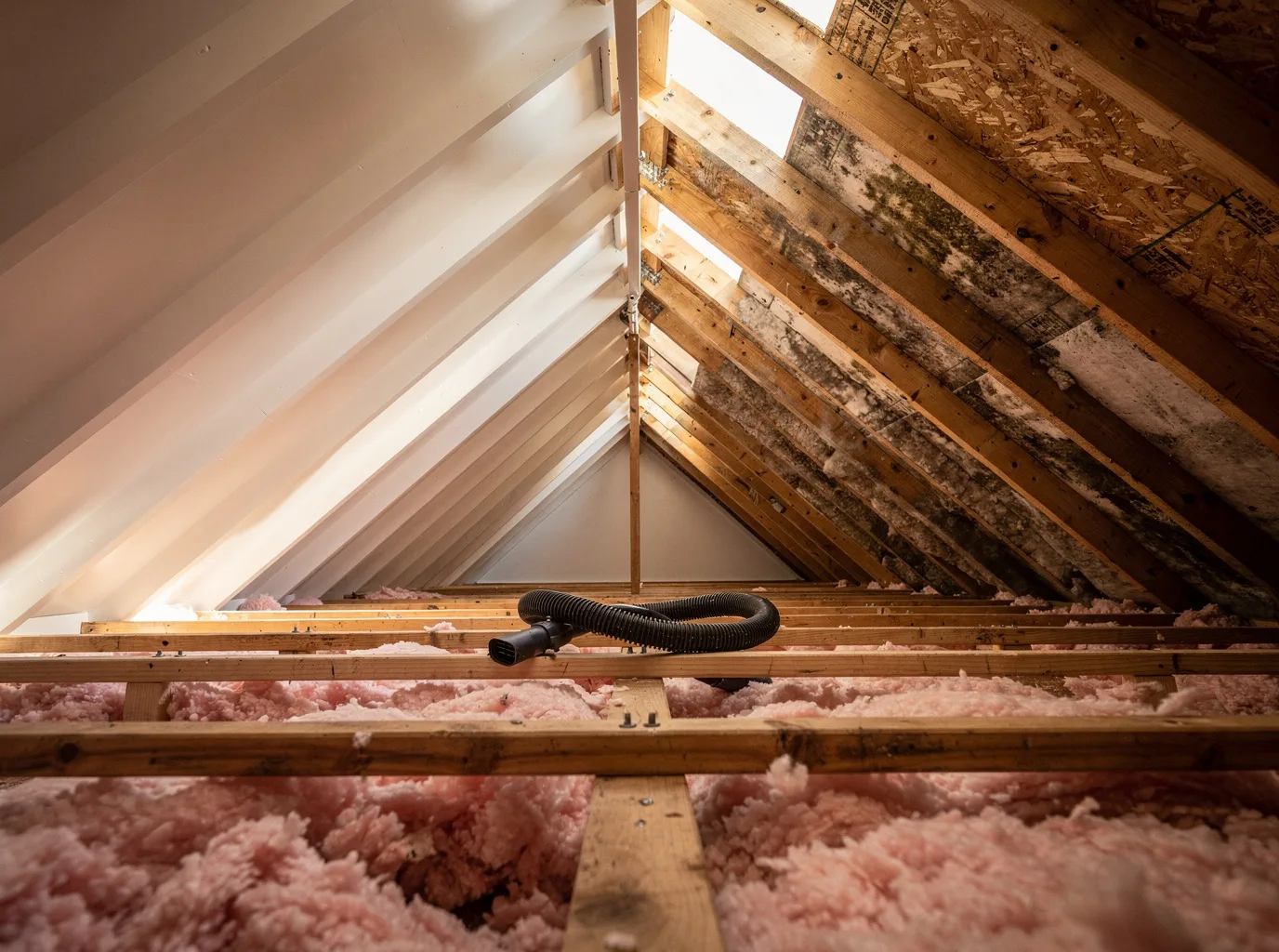
Inspectors check the same spots again and again because that is where water collects: under sinks and dishwashers, behind toilets, around window sills, along exterior walls behind furniture, at the attic sheathing near bathroom fan outlets, and on crawl space joists above bare dirt. A furnace or air handler sitting in a damp utility room gets a look at the coil and drain pan too.

What you get at the end

A good inspection ends with a written report: photos, moisture readings, the likely source, and a rough description of what needs removal. That report is what a remediation crew uses to build an accurate scope, and it gives you something to compare against later post-remediation clearance results. Cost depends on house size, how many areas need access, and whether sampling is added. An inspector can't diagnose health issues, so take any symptom questions to your doctor.

If you are buying a house, schedule the mold inspection inside your inspection contingency window. A general home inspector may note staining, but most do not take moisture readings behind finished walls or open the air handler. A focused visit gives you specifics to negotiate with.

Call (984) 230-5534 and we will connect you with a local mold inspector who covers Guthrie Center, IA.
How it works

Four steps to a mold-free space in Guthrie Center, IA

01

Tell us what you see

Staining on the ceiling, fuzz on the joists, a musty smell in the basement. Describe it and where it is.

02

Get a local crew lined up

We connect you with a mold company covering Guthrie Center, IA that can inspect, take moisture readings and set the scope.

03

Containment and removal

The crew seals the area in plastic, runs HEPA air scrubbers, removes moldy material and cleans the framing.

04

Fix the source, confirm it

The leak or humidity problem gets addressed, and clearance testing can confirm the area before walls close up.

Coverage

Mold Remediation Across Guthrie Center, IA

Mold inspection and removal across the neighborhoods and ZIP codes around Guthrie Center, IA.

ZIP codes we serve

50115
Mold Inspection in Guthrie Center, IA

Mold remediation FAQs

Frequently asked questions about mold remediation

Questions we hear most about Mold Inspection in Guthrie Center, IA.

Talk to a real person
What is the difference between mold removal and mold remediation?
<p>On a small job, not much. Removal is the hands-on part: cutting out moldy drywall, scrubbing framing, HEPA vacuuming. <a href="/services/mold-remediation">Remediation</a> wraps that in containment, negative air pressure and a fix for the moisture source so the growth doesn't return. Anyone promising to remove all mold spores from a house is overselling, since outdoor air always carries some. The goal is to get indoor levels back to normal and stop the growth.</p>
Can I remove mold myself?
<p>Small patches on hard surfaces, roughly under 10 square feet, are usually a homeowner job: wear gloves, an N95 and eye protection, scrub with detergent and water, and dry the area fully. Past that size, or if growth is inside walls, in the HVAC system or on drywall that's soft, a pro with containment and a HEPA scrubber makes more sense. If the area keeps coming back, the moisture source is still there, and cleaning alone won't fix it.</p>
Is black mold dangerous?
<p>We can't give medical advice, and neither can the crew. Health questions about mold exposure should go to your doctor, especially for infants, older adults, or anyone with asthma or a weakened immune system. From the building side, any heavy dark growth on drywall or wood gets the same careful handling: containment, misting, bagging inside the work area and HEPA cleanup. Our <a href="/services/black-mold-removal">black mold removal</a> page explains how crews handle it.</p>
Can I stay in my house during mold remediation in Guthrie Center, IA?
<p>Most homeowners stay put during smaller jobs, since the work area is sealed with plastic and kept under negative air pressure. For large jobs, work near bedrooms, or when the HVAC system has to be shut down for days, some families stay elsewhere. If anyone in the house has health concerns, ask a doctor first. The crew will tell you which rooms are off-limits and whether the heat or AC needs to stay off.</p>
How soon after a leak does mold start growing?
<p>Mold can start growing on wet drywall, carpet pad and wood within about 24 to 48 hours. That's why fast drying matters. If materials were dried quickly with fans and dehumidifiers and readings came back normal, you may have no growth at all. If the leak sat for days or nobody checked inside the walls, call (984) 230-5534 and ask about <a href="/services/mold-removal-after-water-damage">mold removal after a leak</a>.</p>

Book mold remediation

Seeing Mold in Guthrie Center, IA? Call now.

Tell us what you're seeing and we line you up with a mold company covering Guthrie Center, IA. Scope and pricing are worked out after the walkthrough. (984) 230-5534.

Call (984) 230-5534 Services